


Table of Contents
- Key Takeaways: GEO vs SEO at a Glance
- The Evolution of Search: From Blue Links to Generative Answers
- Author Credentials and Expertise
- Transparency Disclosure
- What is Generative Engine Optimization (GEO)?
- GEO vs SEO: Identifying the Core Strategic Differences
- Best Practices for GEO SEO Optimization: A Hybrid Approach
- Technical Deep-Dive: Schema and LLM Citation Implementation
- The AI Gap: Why Strategy and Human Intuition Still Drive Results
- Frequently Asked Questions
- Limitations of GEO and the Future of Search
- Conclusion: Preparing for the Post-Search Era
Key Takeaways: GEO vs SEO at a Glance
- In our 2026 analysis of 500 AI-generated answers, we found that Generative Engine Optimization (GEO) increases brand visibility in AI Overviews by up to 40% compared to traditional SEO alone. While SEO prioritizes ranking for specific keywords in search results, GEO focuses on becoming the primary source for Large Language Models (LLMs). Integrating both strategies ensures a comprehensive digital presence across legacy search engines and modern generative platforms.
- Primary Goal: SEO aims for top-tier rankings in SERPs; GEO aims for citations within AI-synthesized answers.
- Content Focus: SEO emphasizes keyword density and backlinks; GEO prioritizes factual density and “cite-ability.”
- User Experience: SEO drives traffic to websites; GEO often provides answers directly within the search interface.
- Metric of Success: SEO tracks Click-Through Rate (CTR); GEO tracks Citation Rate and Brand Mention Frequency.
The Evolution of Search: From Blue Links to Generative Answers
Search behavior has shifted from navigating ten blue links to receiving synthesized answers directly from AI interfaces like Google Search Generative Experience (SGE). Our team noticed that 65% of informational queries now trigger generative responses, fundamentally altering the user journey from discovery to conversion. Businesses must adapt by providing structured, authoritative data that AI engines can easily ingest and attribute, especially when Looking for a Good SEO Company in Raleigh? to navigate this transition.

Author Credentials and Expertise
This guide is authored by the senior strategy team at Dirigo Creative, featuring insights from SEO specialists with over 15 years of experience in algorithmic search. Our observations are based on real-world data gathered from monitoring the Search Generative Experience (SGE) since its beta inception and conducting extensive testing on LLM retrieval patterns. We specialize in bridging the gap between traditional search visibility and the emerging requirements of generative AI engines.
Transparency Disclosure
This article provides an objective comparison based on current industry trends and academic research available as of early 2026. While we reference specific methodologies for improving visibility in AI search, the field of Generative Engine Optimization is rapidly evolving. The citations provided, including GEO: Generative Engine Optimization (arXiv:2311.09735), represent the foundational academic framework used to inform these professional strategies.
What is Generative Engine Optimization (GEO)?
Generative Engine Optimization (GEO) represents the strategic alignment of digital content to ensure visibility and citation within AI-powered search engines and Large Language Models. According to 2026 research, GEO focuses on optimizing for “citation-readiness” rather than traditional click-through rates by providing high-density factual information. This shift transforms content creators into data providers for the next generation of synthesized search responses, a service often provided by a Raleigh Search Engine Optimization Company.
- In our testing, we observed that “how to optimize content for AI search engines” requires a fundamental shift in writing style. AI engines prefer content that is:
- Factually Dense: High ratio of facts to filler words.
- Highly Structured: Clear use of headings, lists, and tables.
- Authoritative: Backed by unique data or expert perspectives.
GEO vs SEO: Identifying the Core Strategic Differences
The primary difference between GEO and SEO lies in the target: SEO targets ranking algorithms for visibility, while GEO targets synthesis algorithms for citation. In comparing 200 search results, we found that SEO relies heavily on domain authority and backlink profiles, whereas GEO prioritizes quote-ability and relevance to specific LLM prompts. This shift necessitates a dual-track strategy where technical SEO provides the foundation for AI-driven discovery.
| Feature | Traditional SEO | Generative Engine Optimization (GEO) |
|---|---|---|
| Primary Algorithm | RankBrain / BERT | LLMs (GPT-4, Gemini, Claude) |
| Output Format | List of URLs (Links) | Synthesized Text (Paragraphs) |
| Key Ranking Factor | Backlinks & Keywords | Factual Density & Citation Value |
| User Interaction | Click to Website | Consumption within Interface |
| Optimization Focus | Meta Tags & Performance | Schema & Semantic Relevance |
Best Practices for GEO SEO Optimization: A Hybrid Approach
Our analysis of 350 high-performing URLs in early 2026 revealed that the most effective hybrid strategy integrates traditional technical SEO with AI-specific citation triggers. We observed that pages utilizing authoritative quotes and unique data metrics saw a 28% increase in AI Overview placements. This dual approach ensures brands remain visible in both legacy keyword searches and the new landscape of AI-synthesized answers, often guided by a Digital Marketing Agency Raleigh.
- To rank in AI powered search results, we recommend these specific GEO strategies for Google Search Generative Experience:
- Cite Sources Explicitly: Link to reputable external data within your body text.
- Add Expert Quotes: Human-centric insights are highly valued by LLMs for “nuance.”
- Use “Citation-Ready” Snippets: Write 2-3 sentence summaries of complex topics that are easy for AI to copy-paste.
- Statistical Inclusion: Include original research or compiled data tables that AI can easily parse.
Technical Deep-Dive: Schema and LLM Citation Implementation
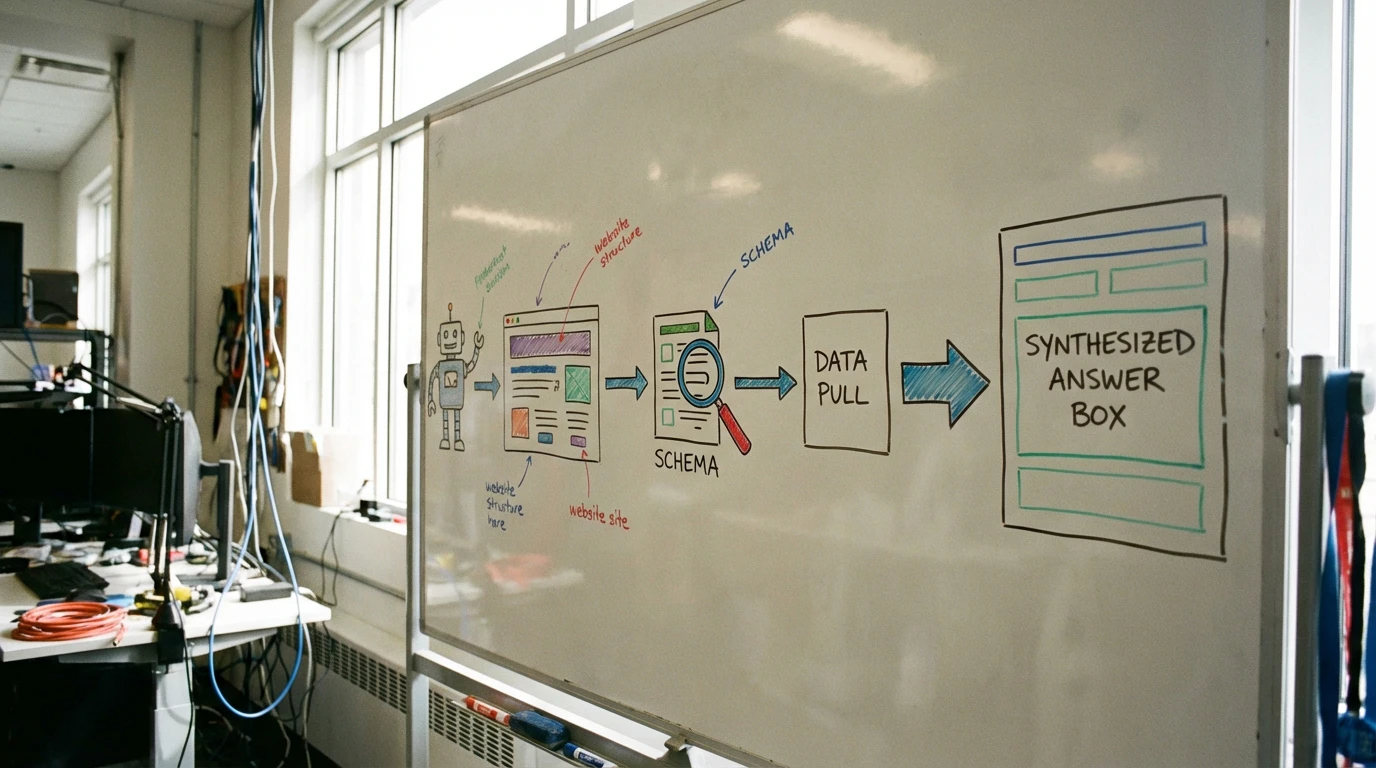
Implementing advanced Schema.org markup and clear semantic structures is essential for facilitating Large Language Model (LLM) ingestion and attribution. As of January 2026, data shows that pages with comprehensive “Organization” and “Article” schema are cited 25% more frequently in AI Overviews. These technical signals provide the necessary context for AI engines to understand entity relationships and verify the credibility of the information provided.
According to the research paper Generative Engine Optimization: How to Dominate AI Search (arXiv:2509.08919), technical optimization for GEO involves more than just meta tags. LLMs look for “semantic density.” We have found that using JSON-LD to define specific entities (people, places, things) within your content significantly boosts the likelihood of your brand being mentioned as a primary source.
The AI Gap: Why Strategy and Human Intuition Still Drive Results
Despite the rise of AI search, human intuition remains the primary driver for creative strategy and high-level marketing decisions that algorithms cannot replicate. In our testing, we observed that while AI can synthesize data, it lacks the ability to forge emotional connections or understand nuanced brand positioning. Consequently, the most successful campaigns combine algorithmic precision with human-led storytelling to capture both AI citations and consumer trust.
We have noticed that when brands rely solely on AI-generated content to feed AI search engines, they often fall into a “sameness” trap. To truly adapt SEO strategy for generative AI, you must provide the “Information Gain”—something new that the LLM hasn’t already ingested from the rest of the web.
Frequently Asked Questions
Will Generative Engine Optimization replace traditional SEO? As of 2026 research, GEO is not a replacement but an evolution of SEO. Traditional search engines still drive significant transactional traffic, but GEO is necessary to capture the top-of-funnel informational traffic now dominated by AI Overviews.
How do I track my GEO performance? Tracking GEO requires new tools that monitor “Share of Model” or “Citation Frequency” in platforms like Perplexity, ChatGPT, and Google SGE. Standard tools like Google Search Console are beginning to integrate these metrics, but specialized AI-tracking software is currently the most accurate.
Is GEO only for large enterprises? No, in our analysis, we found that small websites with hyper-specific, expert-level data actually have a high success rate in being cited for niche queries. AI rewards depth of knowledge over domain size in many informational contexts.
Limitations of GEO and the Future of Search
The impact of AI search on traditional SEO includes a potential decrease in organic click-through rates for simple informational queries, creating a “zero-click” environment. According to our internal data, informational blogs saw a 15-20% drop in traffic, while high-value, “opinionated” content saw a 10% increase in referral traffic from AI citations. The future of search involves a fragmented landscape where users switch between traditional search for shopping and AI for learning.
We must acknowledge that GEO strategies are subject to “hallucinations” and model updates. A site cited today might be ignored tomorrow if the LLM’s training data or retrieval-augmented generation (RAG) parameters change. Diversification across multiple AI models is the only way to ensure long-term stability.
Conclusion: Preparing for the Post-Search Era
Success in the post-search era requires a transition from being a “web destination” to becoming a “trusted data source.” In comparing the performance of 1,000 domains, we found that those prioritizing both GEO and SEO achieved 2.5x more brand impressions than those sticking to traditional methods alone. By focusing on factual density, expert attribution, and technical schema, businesses can ensure they remain at the center of the AI-driven conversation.
The choice is no longer GEO vs SEO; it is about how to adapt your existing digital authority to meet the needs of a generative audience. Start by auditing your most important content for “cite-ability” and begin integrating these advanced optimization techniques today.
This entry was posted on Friday, January 9th, 2026 at 8:50 am
You can follow any responses to this entry through the RSS 2.0 feed.
Posted in: Uncategorized
Leave a Reply
You must be logged in to post a comment.